
Ozempic (semaglutide) is a prescription medicine used to lower blood sugar in adults with type 2 diabetes, along with diet and exercise, and to reduce the risk of major cardiovascular events like heart attacks or strokes in adults with type 2 diabetes and known heart disease. It belongs to a class of drugs called GLP-1 receptor agonists, which mimic a natural hormone that stimulates insulin production when blood sugar is high, slows down stomach emptying, and signals to the brain that you are full.
Ozempic is administered as a weekly subcutaneous (under-the-skin) injection and is packaged in pre-filled, disposable, multi-dose injection pens.
Key Pen Features & Mechanics
-
Multi-Dose Pre-filled Design: Each pen comes pre-loaded with a sterile solution of semaglutide. A single pen contains enough medication for multiple weekly doses, depending on the specific pen configuration prescribed.
-
Dose Selector Dial: Located at the back of the pen, the mechanical dial allows you to select your exact prescribed dose (e.g., 0.25 mg, 0.5 mg, 1 mg, or 2 mg) by turning it until the correct dose indicator lines up with the pointer window. It features clear auditory click sounds to help ensure accuracy.
-
Disposable Novofine® Needles: Ozempic pens do not come with a permanently attached needle. Instead, a new, ultra-thin, disposable NovoFine® or NovoTwist® needle must be screwed onto the pen tip before every injection and safely discarded immediately afterward.
-
Medication Window: A transparent window on the side of the pen body lets you visually check the solution before injecting. The liquid must always appear clear and colorless; if it is cloudy or contains particles, it should not be used.
Available Pen Configurations
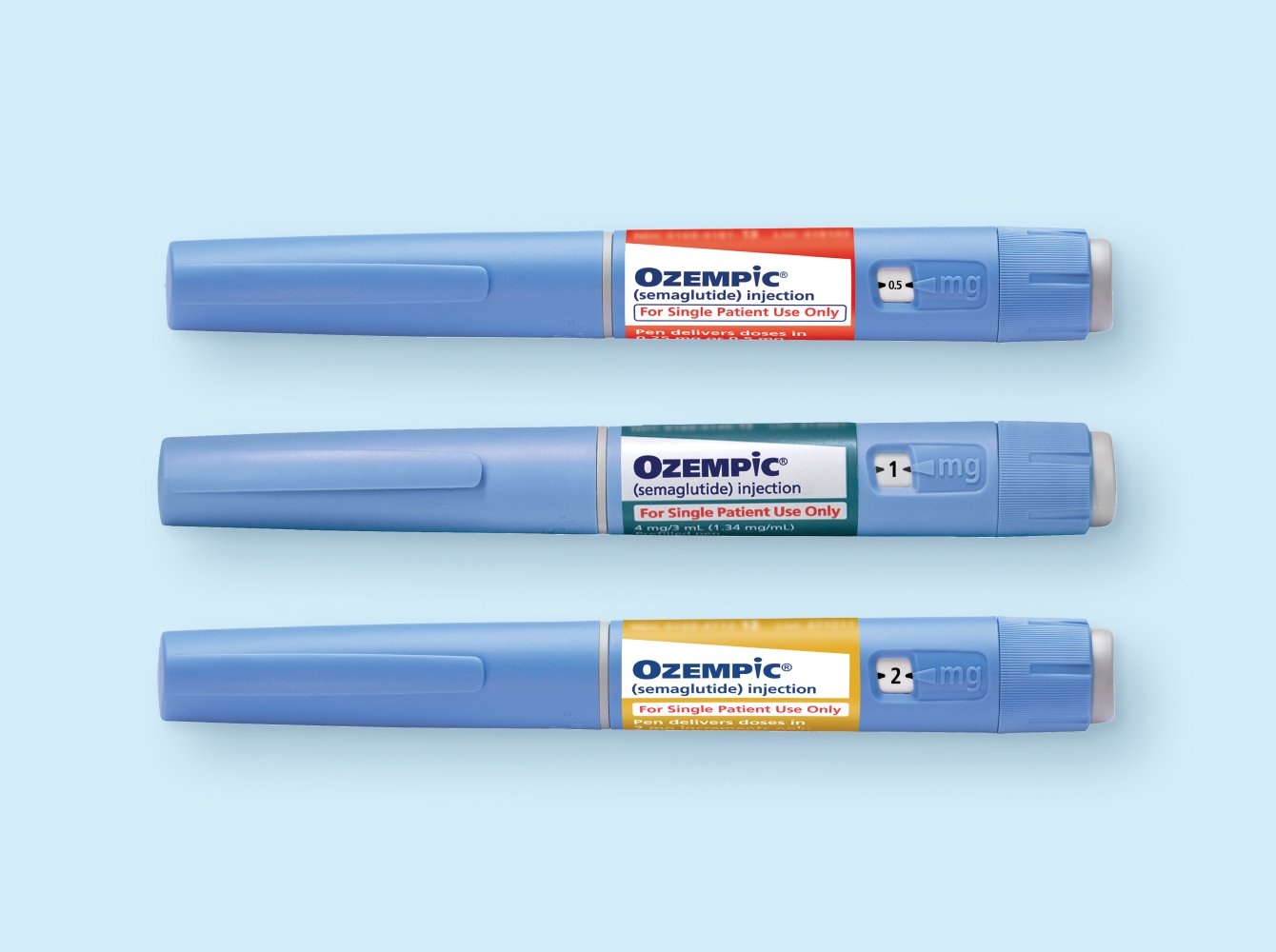
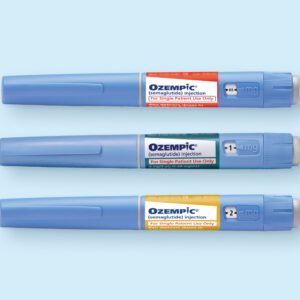
Ozempic is distributed in three distinct pen varieties depending on your therapeutic titration stage:
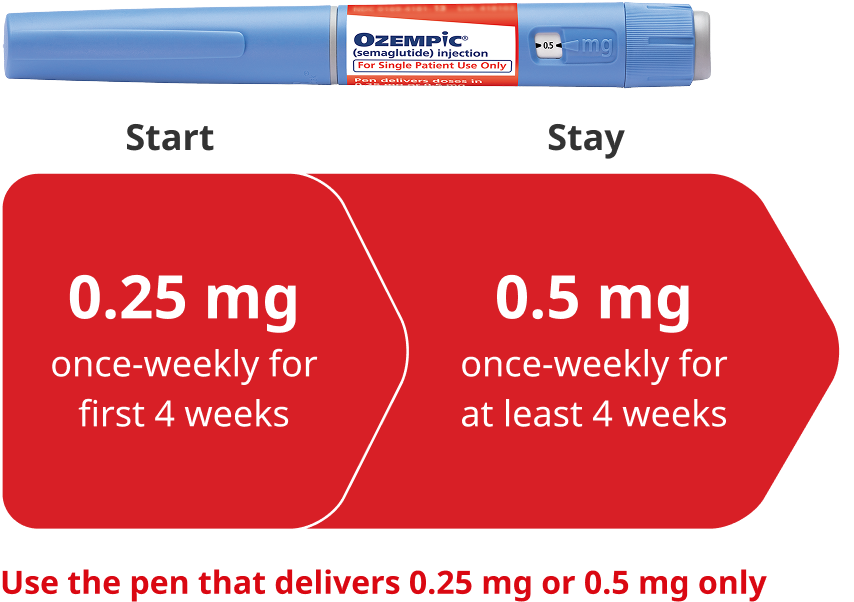
1. The Red Label Pen (STre or 0.5 mg Doses)
-
Intended Use: Used primarily for starting therapy (0.25 mg once weekly for the first 4 weeks) and maintaining early control (0.5 mg once weekly).
-
Volume: Contains 2 mg of semaglutide total in 1.5 mL of solution.
-
Dosing Capability: The dial can be set to either 0.25 mg or 0.5 mg. It typically delivers four 0.25 mg doses and two 0.5 mg doses, or four full 0.5 mg doses.
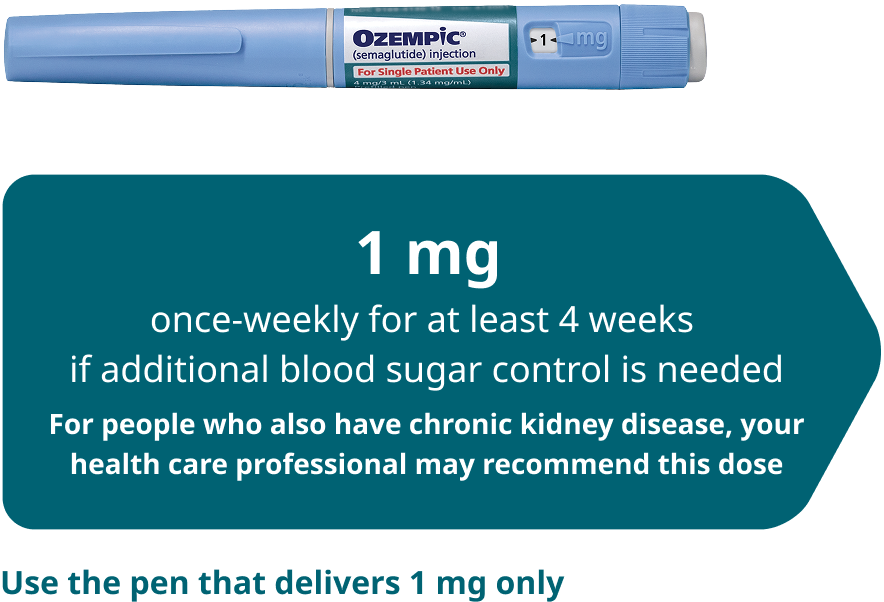
2. The Teal Label Pen (1 mg Doses)
-
Intended Use: For patients who require stronger glycemic maintenance after completing the initial monthly titrations.
-
Volume: Contains 4 mg of semaglutide total in 3 mL of solution.
-
Dosing Capability: The pen dial only locks onto the 1 mg dose setting. It provides exactly four weekly 1 mg injections.
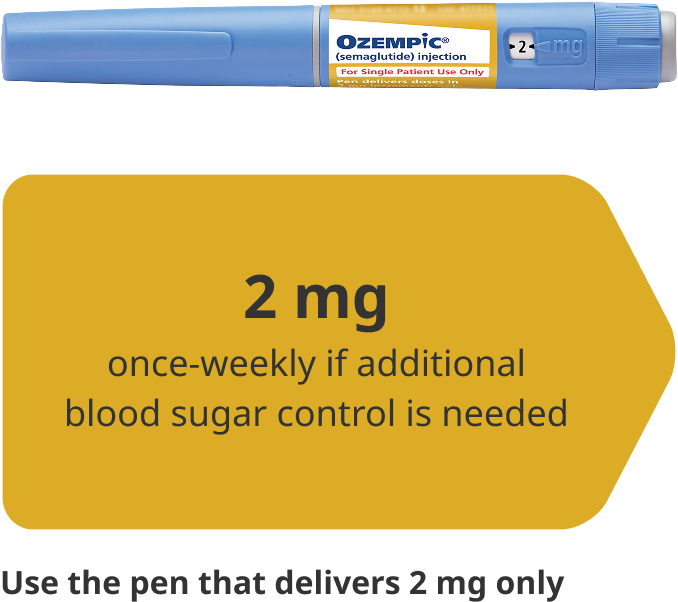
3. The Yellow Label Pen (2 mg Doses)
-
Intended Use: The maximum maintenance dose for patients who require intensive blood sugar management.
-
Volume: Contains 8 mg of semaglutide total in 3 mL of solution.
-
Dosing Capability: The dial only locks onto the 2 mg dose setting. It provides exactly four weekly 2 mg injections.
Administration Protocol
An injection involves a simple multi-step sequence:
-
Preparation: Wash your hands, pull off the pen cap, and wipe the rubber stopper with an alcohol swab.
-
Attach Needle: Peel off the protective paper tab from a new disposable needle and screw it straight and tightly onto the pen. Pull off the outer and inner needle caps.
-
Check Flow (New Pens Only): Turn the dose selector to the flow check symbol. Hold the pen needle-pointing up, press and hold the dose button, and ensure a drop of liquid appears at the needle tip.
-
Dial and Inject: Turn the dial to your exact prescribed dose. Insert the needle into the skin of your abdomen, thigh, or upper arm. Press and hold down the dose button until the dose counter returns to 0, then slowly count to 6 before withdrawing the needle to ensure the full dose is delivered.
-
Safe Disposal: Carefully remove the needle from the pen and discard it immediately into an approved sharps container. Replace the pen cap.
Technical Specifications & Storage
| Attribute | Specification |
| Active Ingredient | Semaglutide (GLP-1 receptor agonist) |
| Administration Route | Subcutaneous injection only (Abdomen, thigh, or upper arm) |
| Dosing Schedule | Once weekly, on the same day each week, at any time of day |
| Unused Pen Storage | Refrigerator between 2°C and 8°C (36°F to 46°F) — Do not freeze |
| In-Use Pen Storage | Room temperature below 30°C (86°F) OR in the refrigerator |
| In-Use Lifespan | Must be discarded after 56 days (8 weeks), even if medication remains |
| Manufacturer | Novo Nordisk A/S |
Important Safety & Side Effect Profile
Boxed Warning: Ozempic causes thyroid C-cell tumors in rodents. It is unknown if it causes thyroid C-cell tumors, including medullary thyroid carcinoma (MTC), in humans. Do not use if you or anyone in your family has ever had MTC or Multiple Endocrine Neoplasia syndrome type 2 (MEN 2).
-
Common Side Effects: Primarily gastrointestinal, including nausea, vomiting, diarrhea, abdominal pain, and constipation. These usually minimize over time as the body adapts to the medication.
-
Serious Risks: Can cause acute pancreatitis, changes in vision (diabetic retinopathy complications), hypoglycemia (especially when combined with insulin or sulfonylureas), acute kidney injury, and gallbladder problems. Seek immediate medical attention if you experience severe, persistent stomach pain that radiates to your back.
Reviews
There are no reviews yet.